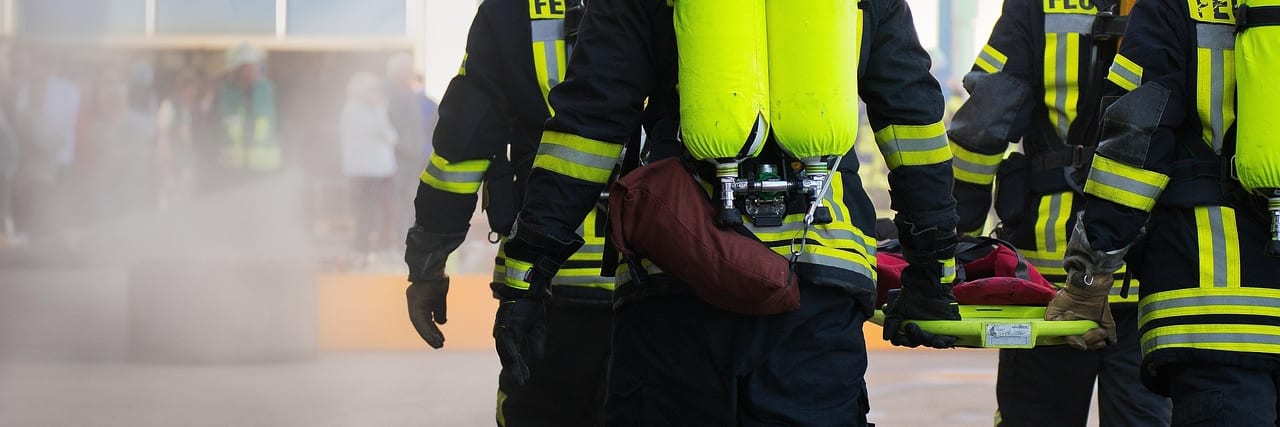
What Does a Fire Marshal Do?
A fire marshal is a trained member of staff responsible for preventing fires, maintaining fire safety systems, and leading evacuations in the workplace. They play a critical role in keeping people safe under the Regulatory Reform (Fire Safety) Order 2005.
Core Duties of a Fire Marshal
Fire marshal responsibilities typically fall into three categories: prevention, preparation, and emergency response.
Prevention
- Carrying out regular fire risk assessments and workplace inspections
- Identifying fire hazards such as blocked exits, faulty wiring, and improper storage of flammable materials
- Ensuring housekeeping standards minimise fire risk
- Reporting deficiencies to management and recommending improvements
Preparation
- Checking fire detection and alarm systems are working
- Inspecting fire extinguishers, fire doors, emergency lighting, and signage
- Ensuring escape routes are clear and accessible
- Helping develop and update the fire evacuation plan
- Assisting with Personal Emergency Evacuation Plans (PEEPs) for disabled colleagues
- Organising and leading fire drills
Emergency Response
- Raising the alarm and calling the fire service
- Guiding people to the nearest safe exit
- Sweeping their designated area to confirm everyone has evacuated
- Accounting for all personnel at the assembly point
- Liaising with the fire service on arrival
- Preventing re-entry until the all-clear is given
Fire Marshal vs Fire Warden — What's the Difference?
In most UK workplaces, the terms "fire marshal" and "fire warden" are used interchangeably. There is no legal distinction between the two roles. However, in practice:
| Fire Marshal | Fire Warden |
|---|---|
| Broader strategic role | Primarily evacuation-focused |
| Conducts fire risk assessments | Assists during evacuations |
| Trains and briefs staff | Sweeps designated zones |
| Liaises with fire service | Reports to fire marshal |
How Many Fire Marshals Does a Workplace Need?
There is no fixed legal number. The Regulatory Reform (Fire Safety) Order 2005 requires the "responsible person" to appoint a sufficient number of competent people to assist with fire safety. General guidance suggests:
- Low-risk premises (offices, shops) — at least one fire marshal per floor
- Medium-risk premises — one fire marshal per 50 employees
- High-risk premises (warehouses, factories) — one fire marshal per 20 employees
You should also account for shift patterns, holidays, and absences to ensure there is always a trained fire marshal on site.
What Training Do Fire Marshals Need?
Fire marshals should receive training that covers:
- Fire science — how fires start, spread, and behave
- Fire prevention — identifying and eliminating hazards
- Fire risk assessment — the five-step process
- Fire safety legislation — the Fire Safety Order 2005
- Fire extinguisher types and their correct use
- Evacuation procedures and assembly point management
- Record keeping and fire safety management
Training should be refreshed annually or when there are significant changes to the workplace.
Take Our Fire Marshal Level 3 Course
Our free online Fire Marshal Level 3 course covers fire science, risk assessment, prevention, evacuation planning, and fire safety management — all aligned to UK legislation including the Fire Safety Order 2005.
Start Fire Marshal CourseFrequently Asked Questions
Is fire marshal training a legal requirement?
Yes. Under the Regulatory Reform (Fire Safety) Order 2005, the responsible person must ensure that employees are provided with adequate fire safety training. Anyone designated as a fire marshal needs specific training to carry out their duties competently.
How long does fire marshal training take?
Typical fire marshal training courses take between 3 and 5 hours, depending on the level and depth of content. Our online Fire Marshal Level 3 course takes approximately 5 hours.
Do fire marshals get paid extra?
There is no legal requirement for additional pay. However, some employers offer a small supplement or recognise the role in performance reviews. It is an excellent addition to your CV and demonstrates leadership and responsibility.